

Golf’s Greatest Stages: The Tournaments Built on Pressure, Place and Memory
There is no single biggest golf tournament by every measure. The Masters owns the most recognizable setting, The Open has the oldest history, the U.S. Open applies the severest examination, the PGA Championship brings an exceptionally deep field, and the Ryder Cup creates a level of team pressure rarely seen in an individual sport.
The status of the biggest golf tournaments comes from more than prize money. Course identity, qualification rules, trophy history and unforgettable final rounds have turned them into reference points for the entire golf game.
The hierarchy starts with four men’s majors
The Masters, PGA Championship, U.S. Open and The Open form the four-major structure of men’s professional golf. Each rewards a different competitive skill set.
|
Tournament |
First played |
Defining characteristic |
|
The Open |
1860 |
Links golf, weather and changing ground conditions |
|
U.S. Open |
1895 |
Demanding course setup and national qualifying |
|
PGA Championship |
1916 |
Deep professional field and the Wanamaker Trophy |
|
Masters Tournament |
1934 |
One permanent venue and a tightly controlled field |
|
Ryder Cup |
1927 |
Match play between the United States and Europe |
The Open began at Prestwick in October 1860, where Willie Park Sr. became the first Champion Golfer. The first Masters was held in March 1934, while the PGA Championship dates to 1916 and changed from match play to stroke play in 1958.
The Ryder Cup is not a major and does not award individual prize money, yet its match-play format gives every hole immediate strategic value.
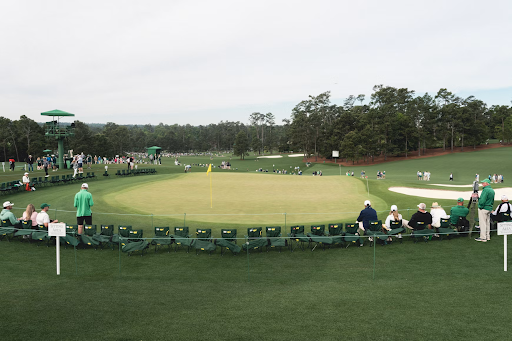
Augusta turns familiarity into pressure
The Masters is played at Augusta National every year, allowing viewers to recognize the exact slopes, landing areas and risk zones. Familiarity does not make the course predictable.
Players must account for:
- elevation changes that distort yardage;
- approach shots landing on severe green contours;
- pine straw that complicates recovery shots;
- par-five opportunities that punish imprecise aggression;
- putting surfaces where the wrong miss can add two shots.
That recurring geography gives the Masters an unusual narrative advantage. Fans remember not only who won, but where the decisive shot happened.
Jack Nicklaus’s 1986 victory remains the clearest example. At 46, he produced a Sunday charge that secured his sixth green jacket, with his tee shot at the par-three 16th becoming one of the tournament’s defining images. He remains the Masters record holder with six victories.
Golf analysis begins with course fit
A player’s world ranking offers a useful baseline, but it does not explain how that player’s shot pattern fits a particular venue. Course-specific analysis often reveals more than a general form table.
Someone following a major with a betting app India should examine approach-shot distance, driving accuracy, scrambling performance and previous results on comparable grass and terrain. Augusta rewards precise iron play and creative recovery, while a coastal links course asks players to control trajectory in changing wind. The same golfer may therefore deserve different expectations at the Masters and The Open. Treating every tournament as an identical four-round contest removes the most informative part of golf analysis.
Weather should also be evaluated by tee time. A coastal wind that strengthens in the afternoon can create materially different scoring conditions for opposite sides of the draw.
The Open lets nature rewrite the leaderboard
The Open is golf’s original championship, first contested in 1860. Its identity comes from links courses where firm ground, coastal wind, bunkers and irregular bounces influence shot selection.
Players may deliberately land the ball well short of the green and use the ground rather than attack the flag in the air. A 150-yard approach can require a short iron in one round and a low-running long iron the next.
That variability is not a flaw in the competition. It is the competition.
Tiger Woods demonstrated one form of links control at St Andrews in 2000, setting The Open’s record score relative to par at 19 under. The official championship records also list his 2006 Royal Liverpool total at 18 under, a performance built around controlled placement and limited use of the driver.
The Open rotates among historic venues rather than remaining at one course. Royal St George’s became the first English club to stage the championship in 1894, ending Scotland’s exclusive hold on the event.
The U.S. Open makes par meaningful again
The U.S. Open is designed to test complete control rather than reward one dominant strength. Narrow targets, firm greens and penal recovery areas make small positional errors expensive.
Its history is filled with winning scores near par, but difficulty alone does not make a championship memorable. The strongest editions preserve several strategic routes while punishing shots that miss on the wrong side.
The 2008 championship at Torrey Pines produced one of the sport’s most demanding victories. Tiger Woods played with a fractured leg and damaged anterior cruciate ligament, made a birdie on the 72nd hole to force an 18-hole playoff with Rocco Mediate, then won after an additional sudden-death hole. The event lasted 91 holes.
That contest also explains why golf cannot be reduced to a final score. Woods and Mediate repeatedly changed the psychological state of the championship without playing directly beside each other during every stage.
The PGA Championship exposes shallow fields
The PGA Championship has often been described by its organizers as having one of the strongest fields in men’s golf. Its value lies in depth: players cannot rely on several predictable early-round gaps in quality.
The Wanamaker Trophy has been awarded since the inaugural championship in 1916. The event used match play until 1957 before adopting its current 72-hole stroke-play format.
Y.E. Yang’s 2009 victory at Hazeltine remains one of its defining upsets. He began the final round two shots behind Tiger Woods, chipped in at the short par-four 14th and eventually won by three strokes. It was the first time Woods had failed to convert a 54-hole lead in a major.
The result carried additional historical weight because Yang became the first male golfer from Asia to win a major championship.
Betting models need more than recent finishing positions
Golf markets contain dozens of variables, but more data does not automatically produce better judgment. The useful task is identifying statistics that explain performance at the course being played.
Analysis on a MelBet sports betting platform can begin with outright prices, top-finisher markets and head-to-head matchups, then move to course-specific evidence. A player with four recent top-20 finishes may still be a poor fit for a venue that exposes inaccurate driving or weak bunker play. Another golfer may have modest recent results but a repeatable record on firm links courses. The price becomes informative only when it is compared with a reasoned probability rather than treated as a prediction.
Bankroll planning matters because golf tournaments have large fields and high outcome variance. Smaller exposure across researched markets gives the analysis more room to survive a missed cut or one unusually poor round.
The Ryder Cup changes the mathematics of golf
The Ryder Cup compresses golf into match play, where a disastrous hole costs only one hole rather than several leaderboard positions. That changes risk selection immediately.
A player trailing late may attack a pin that would be avoided in stroke play. Captains must also decide which personalities and shot patterns work in foursomes, where teammates alternate shots, and fourballs, where both play their own ball.
The 1991 contest at Kiawah Island became known as the “War by the Shore.” The United States won 14½–13½ after Bernhard Langer missed a short putt on the final green, leaving the entire competition dependent on its last meaningful stroke.
That ending captured what makes team golf different. A putt struck by one player carried the accumulated weight of 28 matches, two captains and three days of tactical decisions.